
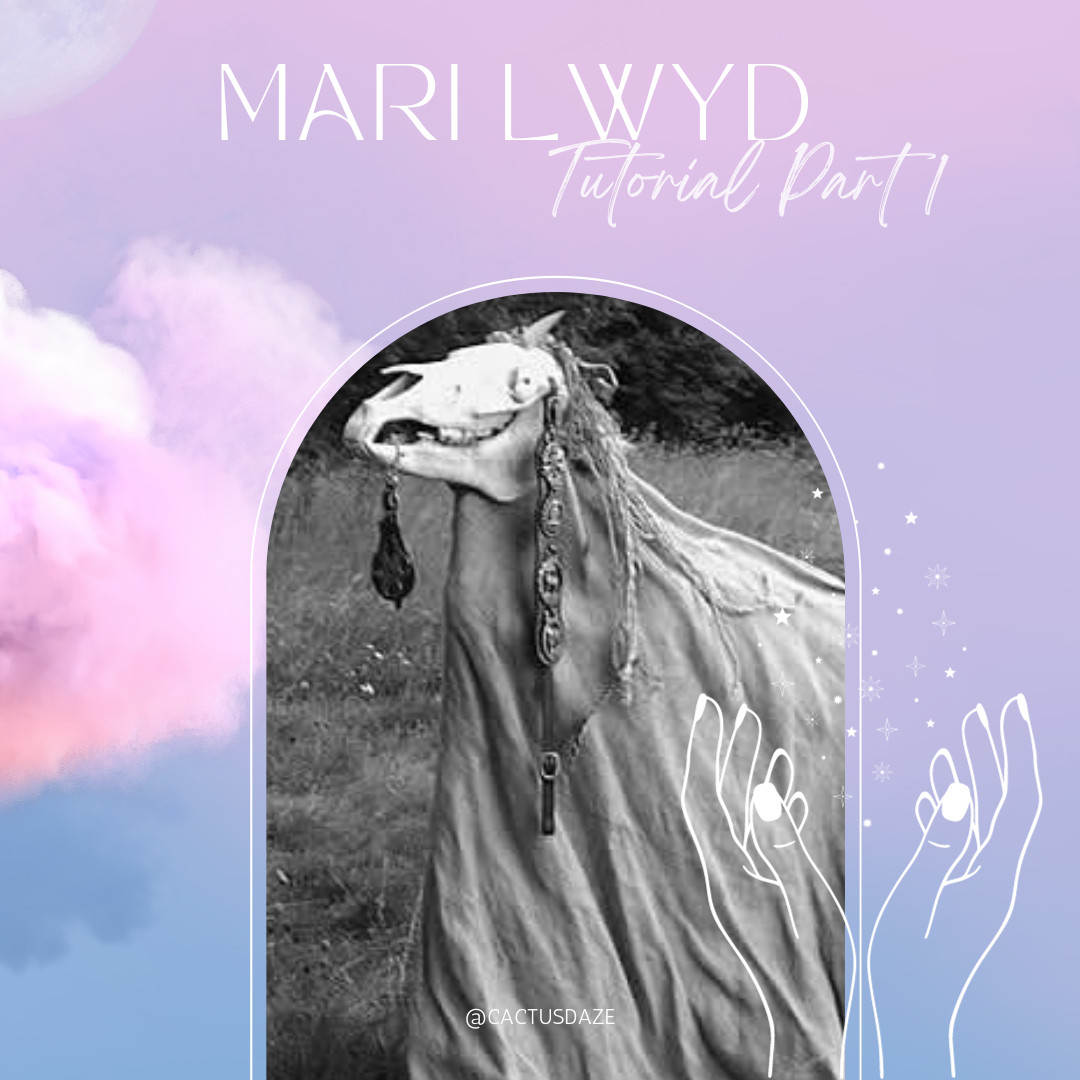
The Mari Lwyd is gaining some popularity again as a spooky Yule character. According to Wikipedia, the Mari Lwyd is a wassailing tradition that originates in Wales. Groups of young men would take the Mari from house to house, engaging in a battle of rhymes in order to gain entry into that house—and their tasty treats. My introduction to the Mari Lwyd came from Tumblr—where one tourist commented that the Welsh love for cheese and beer ‘surpasses peak white person.’ So, naturally, that’s what the horse ghost wanted.
We’ve been wanting to make a Mari in my household for years—but it is surprisingly difficult to source some of the materials. Finally, we managed to source the all-important Horse Skull in late 2022. But, shipping difficulties meant we didn’t receive it until Yule was already passed. Most of the documentation about the process of making a Mari is in Welsh, so I thought I would begin my own documentations as an English resource. I have included video from my TikTok account in order to make the process section easier.
Correction: the source my partner has been using IS in English. It is here.
Preparation and Stuff to Know
First, you need to get a very large tub or other form of storage. The horse skull is far more fragile than we initially thought it would be. So you need to source a place for it before anything else. We lined our tub with thick foam from Jo Anns.
Second, some of the teeth will probably have fallen out during shipping. We used the tub and foam as a way to stabilize the skull while we did some Post Mortem Dentistry and glued the teeth back in.
Third, shipping a horse skull is a huge expense. We actually spent just as much money shipping this horse skull as we did with the purchase. It was far more expensive than we thought it would be, but we spent so long trying to source a skull at full size that we decided to just go for it.
Materials and Tools
Keep in mind: this tutorial / diy process covers only part of the actual process—and thus only part of the materials. These materials are in addition to the horse skull.
- E6000 (Used for adhering teeth back in place)
- Aves 2-part Apoxie Sculpt (Used to adhere the PVC Pipe Jointer to the base of the skull)
- PVC Pipe Jointer
- Tall Wooden Dowel
- Brass Hitch Pin
- Drill Press (To attach the Hitch Pin to the Dowel)
- Felt (To prevent jawbones from grinding against one another directly, and deteriorating)
- Zip Ties (to keep the two jaw bones in place)
Process
Step 1: Insert the felt between the jawbones and then secure the jawbones with zip ties. This allows the jaw of the Mari to ‘clack’ during performances or use when wassailing. Everyone loves the clack. Ours is currently pretty ugly, but I plan on tidying it up later during the process.
Step 2: Turn the skull upside down in its storage container. Using E6000, secure any teeth that have fallen out back into the jaw.
Step 3: Using a drill press, carefully cut a hole in the PVC Pipe Jointer and dowel—this is where there will also be a hole in the dowel that the brass hitch pin will go through to secure it during wassailing. You may need to shave off some of the top of the dowel after Step 4 if some of the apoxie sculpt prevents the dowel from reaching its original depth.

Step 4: Mark on the skull (perhaps in sharpie or pencil) where you want the dowel to be placed. There is a pretty good spot that was pointed out in our original resource that we copied. Then, mix the two-part apoxie sculpt according to manufacturer instructions, let is rest (according to manufacturer instruction) and then apply it around the PVC pipe joiner. Then, let it rest for 24 hours, and check for security.


Step 5: Check the fit of the dowel and PVC pipe jointer. Shave off some of the top of the dowel if necessary. Check the fit of the brass hitch pin.
Note
Important note to all my celestial bodies, broken satellites, and other forms of space junk: I’m still quite sick. I’m trying to do a better job of actually resting instead of trying to make up for ‘lost time’ when I start to feel better. From what I can tell, I seem to have finally picked up a nasty virus that’s been lurking around my social group—several people have been taken out for a month on and off. In the evenings, I start running rapid cycles of fever and chills in addition to waves of nausea. Just wanted to keep everyone updated.
Leave a Reply